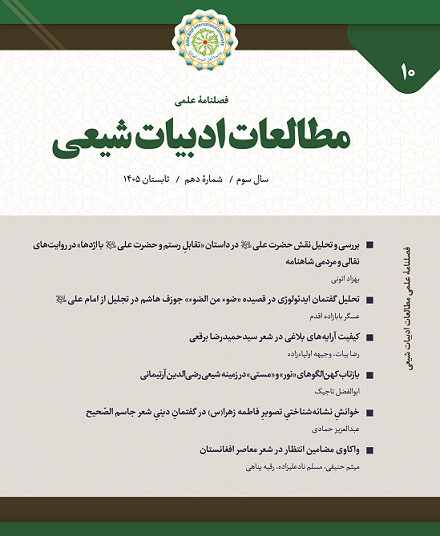
مطالعات ادبیات شیعی

مطالعات ادبیات شیعی

بازتاب کهن‌الگوهای «نور» و «مستی» در زمینه شیعی رضی‌الدین آرتیمانی

نوع مقاله : مقاله پژوهشی

نویسنده
گروه ادیان و عرفان دانشکده مطالعات اسلامی دانشگاه بین المللی اهل بیت(ع) تهران
10.22034/ssl.2026.2097113.1097
چکیده
ادبیات عرفانی در عصر صفوی، بستری برای بازتاب ناخودآگاه جمعی و واکنشی به فضای زهد ریایی حاکم بر آن دوران بود. رضی‌الدین آرتیمانی با بهره‌گیری از میراث ایران باستان و حکمت اشراق، دو کهن‌الگوی «نور» و «مستی» را برای بیان تجربیات عرفانی خود برگزید. مسئله اصلی این پژوهش،تبیین چگونگی بازتاب، هم‌نشینی و کارکرد این دو کهن‌الگو در ساختار ذهنی و زبانی شاعر است. کهن‌الگوهای «نور» و «مستی» با چه بسامد و کیفیتی در دیوان آرتیمانی بازتاب یافته‌اند و چه رابطه‌ای میان این دو نماد در منظومه فکری او برقرار است؟ این پژوهش به روش توصیفی ـ تحلیلی و با رویکرد «تحلیل محتوای کمی» انجام شده است. جامعه آماری شامل کل دیوان رضی‌الدین آرتیمانی(ساقی‌نامه،غزلیات و...) است که واژگان کلیدی آن بر اساس تکنیک کدگذاری استخراج و مورد سنجش آماری قرار گرفته‌اند. یافته‌ها نشان می‌دهد که بسامد واژگان حوزه «مستی»(۵۴۰ مورد)بیش از دو برابر واژگان حوزه «نور»(۲۴۴ مورد)است. این نسبت(۲.۲ به ۱) بیانگر آن است که در الهیات رندانه آرتیمانی،«مستی» به مثابه «طریقت» و ابزار ویرانگریِ «خودِ کاذب» و ریاکاری، مقدّمه‌ای ضروری برای نیل به «نور» به عنوان «حقیقت» و غایتِ سلوک است. همچنین مشخص شد که شاعر به تفکیکِ کارکردی،«ساقی‌نامه» را کانونِ مستی(بی‌خودی)و «غزلیات» را جلوه‌گاهِ نور(شهود)قرار داده است. تمایز این برداشت عارفانه آرتیمانی به عنوان یک شاعر با صبغه شیعی از باور عرفان اسلامی عامّ، خاستگاه روایی ـ دعایی به دو کلیدواژه مستی و نور در ادبیات شیعیان است که در این مقاله به عنوان جنبه نوآوری پژوهش به وضوح برجسته گردیده است.
کلیدواژه‌ها
موضوعات

عنوان مقاله English

The Reflection of the Archetypes of "Light" and "Intoxication" in the Shi'a Context of Radi al-Din Artimani

نویسنده English

Abolfazl Tajik
Department of Religions and Mysticism, Faculty of Islamic Studies, Ahlulbayt International University, Tehran
چکیده English

Mystical literature in the Safavid era served as a platform for the reflection of the collective unconscious and a reaction to the prevalent atmosphere of hypocritical asceticism. Drawing upon the heritage of ancient Iran and Illuminationist philosophy (Hikmat al-Ishraq), Razi al-Din Artimani selected the two archetypes of "Light" and "Intoxication" to articulate his mystical experiences. The primary objective of this research is to elucidate the manner of reflection, juxtaposition, and function of these two archetypes within the poet's mental and linguistic structure. With what frequency and quality are the archetypes of "Light" and "Intoxication" reflected in Artimani's Divan, and what relationship exists between these two symbols within his intellectual system? This study was conducted using a descriptive-analytical method with a "quantitative content analysis" approach. The statistical population comprises the entire Divan of Razi al-Din Artimani (including the Saqinama, Ghazals, etc.), from which keywords were extracted via coding techniques and subjected to statistical analysis. The findings indicate that the frequency of vocabulary within the semantic field of "Intoxication" (540 instances) is more than double that of the "Light" field (244 instances). This ratio (2.2 to 1) suggests that in Artimani's Rindana (libertine) theology, "Intoxication"—acting as the "Path" (Tariqa) and a tool for the deconstruction of the "False Self" and hypocrisy—serves as a necessary prerequisite for attaining "Light," which represents the "Truth" (Haqiqa) and the ultimate goal of the spiritual journey. Furthermore, it was determined that through a functional distinction, the poet established the Saqinama as the focal point of Intoxication (selflessness/ecstasy) and the Ghazals as the locus of Light (intuition/witnessing).

کلیدواژه‌ها English

Razi al-Din Artimani
Archetypal Criticism
Collective Unconscious
Mysticism
Light
Intoxication