مطالعات ادبیات شیعی

مطالعات ادبیات شیعی

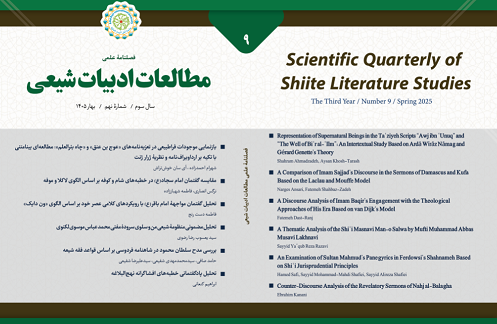
تحلیل پادگفتمانی خطبه‎ های افشاگرانه نهج ‎البلاغه

نوع مقاله : مقاله پژوهشی

نویسنده
دانشیار گروه زبان و ادبیات فارسی، دانشکدۀ علوم انسانی، دانشگاه کوثر بجنورد، بجنورد، ایران.
10.22034/ssl.2026.2094345.1090
چکیده
پژوهش حاضر با هدف شناسایی و تحلیل گونه‌های پادگفتمان در خطبه‌های افشاگرانۀ نهج‌البلاغه و تبیین نقش آن‌ها در بازنمایی مناسبات قدرت، ایدئولوژی و تقابل‌های گفتمانی عصر امام علی(ع) انجام شده است. در شرایط منازعه‌های گفتمانی، قدرت با تثبیت معنا، مشروعیت‌بخشی به روایت مسلط و به حاشیه‌راندن روایت‌های رقیب بازتولید می‌شود. ازاین‌رو، تبیین سازوکارهای برساخت گفتمان مقاومت و چگونگی بازآرایی مناسبات معنا و قدرت، یکی از مسائل بنیادین در تحلیل متون دینی و تاریخی است. این پژوهش در پی پاسخ به این پرسش است که امام علی(ع) از چه گونه‌های پادگفتمانی برای به چالش کشیدن گفتمان مسلط بهره گرفته و این راهبردها بر پایه چه سازوکارهای گفتمانی و با چه کارکردهایی سازمان یافته‌اند. تحلیل بر اساس چارچوب نظری پادگفتمان انجام شد. یافته‌ها نشان می‌دهد که امام علی(ع) با بهره‌گیری از یازده گونۀ پادگفتمانی، شامل پاداستعاری، پادتودرتو، پادروایی، پاد مبتنی بر پرسش، شبیه‌سازی ارجاعی، احیای کنشگر، تفویض اختیار، فراخواندن مخاطب، پادتجویزی، پاداستعلایی و پادنهادی، نظام معنایی گفتمان مسلط بنی‌امیه را به چالش کشیده و گفتمانی بدیل مبتنی بر عدالت، تقوا و سیرۀ نبوی مفصل‌بندی کرده است. در میان این گونه‌ها، پاداستعاری پربسامدترین راهبرد و پادتودرتو پیچیده‌ترین الگوی سازمان‌دهی گفتمان است. همچنین، پادروایی و شبیه‌سازی ارجاعی در افشای تحریف تاریخی و بازتعریف مشروعیت نقش محوری دارند. تقابل «ما/آن‌ها» نیز به‌منزلۀ راهبردی بنیادین، هویت گفتمان حق را در برابر گفتمان انحرافی تثبیت می‌کند. در مجموع، نهج‌البلاغه متنی گفتمان‌ساز است که با سازمان‌دهی منسجم راهبردهای پادگفتمانی، هژمونی گفتمان بنی‌امیه را به چالش کشیده و الگویی برای تحلیل پادگفتمان در سایر متون ارائه می‌کند.
کلیدواژه‌ها
موضوعات

عنوان مقاله English

Counter-Discourse Analysis of the Exposé Sermons in Nahj ul-Balaghah

نویسنده English

Ebrahim Kanani
Associate Professor, Department of Persian Language and Literature, Faculty of Humanities, Kosar University of Bojnord, Bojnord, Iran.
چکیده English

This study investigates the types of counter-discourse employed in the expositional sermons of Nahj ul-Balagha and explains their role in representing power relations, ideology, and discursive conflict during the era of Imam Ali (A.S.). In contexts of discursive struggle, power is reproduced not only through political institutions but also through the construction of meaning, the legitimation of dominant narratives, and the exclusion of competing voices. Explaining how resistance discourse reconstructs meaning, legitimacy, and power therefore constitutes a fundamental issue in the analysis of religious and historical texts. Accordingly, this study examines the types of counter-discourse employed by Imam Ali (A.S.), the discursive strategies on which they are based, and their functions in challenging the dominant discourse. The analysis is conducted within the framework of Counter-Discourse Theory. The findings reveal that Imam Ali (A.S.) employs twelve types of counter-discourse, including metaphorical, embedded, narrative, interrogative, referential, actor-restoration, authorization, audience-invocation, prescriptive, transcendental, and institutional forms, to challenge the Umayyad discursive order and articulate an alternative discourse grounded in justice, piety, and the Prophetic tradition. Among these, metaphorical counter-discourse is the most frequent, whereas embedded counter-discourse represents the most complex pattern of discursive organization. Narrative and referential strategies expose historical distortions and reconstruct legitimacy, while the binary opposition of “us” and “them” functions as the principal mechanism for consolidating the discourse of truth against the dominant deviant discourse. Overall, Nahj ul-Balagha emerges as a dynamic discourse that systematically contests Umayyad hegemony and provides a comprehensive framework for analyzing counter-discourse in religious and historical texts.

کلیدواژه‌ها English

Counter-discourse
Hegemony
Expositional Sermons of Nahj ul-Balagha
Umayyads
Imam Ali