نوع مقاله : مقاله پژوهشی
عنوان مقاله English
نویسنده English
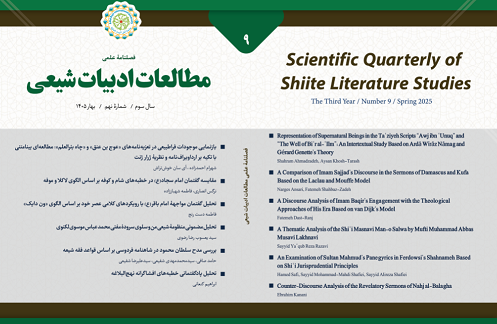
Man u Salwā, a didactic mathnawī composed by Mufti Muḥammad ʿAbbās Mūsavī Lucknowī Shūshtarī, a distinguished Shiʿi scholar, jurist, and Persian poet of the Indian subcontinent, is a major work of Persian didactic literature produced in the thirteenth century AH (nineteenth century CE). Written as a poetic response (istiqbāl) to Nān u Ḥalwā by Shaykh Bahāʾī, the poem comprises approximately 2,900 couplets in the ramal metre and addresses a broad range of religious, ethical, and theological themes, including moral exhortation, the condemnation of worldly attachment, criticism of Sufism, opposition to Greek philosophy, denunciation of hypocritical religious scholars, praise of the Ahl al-Bayt, advocacy of contentment and patience, and the importance of night prayer and supplication. Drawing on the critical edition prepared by Mahdī Karbāsī and employing a library-based approach, this article offers a thematic analysis of the poem. The findings indicate that Man u Salwā articulates a coherent vision of religious and moral reform through the medium of Persian didactic poetry. Employing a clear and accessible style, Mufti Muḥammad ʿAbbās defends the authority of the Sharīʿa against religious innovations (bidʿa), critiques the major intellectual currents of his time—including Sufism, Greek-influenced philosophy, and Akhbārism—and, through extensive engagement with the Qurʾān, Nahj al-Balāgha, and the traditions of the Ahl al-Bayt, calls upon the Shiʿi community of northern India to return to what the poet presents as the authentic teachings of Islam. The poem's principal thematic concerns include spiritual awakening through the remembrance of death, the condemnation of worldly attachment, criticism of Sufism and the doctrine of waḥdat al-wujūd, opposition to Greek philosophy and Avicenna, the virtues of contentment and patience, praise of the Ahl al-Bayt, the importance of night prayer and supplication, criticism of hypocritical religious scholars, and the rejection of Akhbārism. Collectively, these themes reveal an integrated model of religious reform in which ethical cultivation, doctrinal orthodoxy, and the preservation of Shiʿi religious identity are presented as mutually reinforcing dimensions of a coherent intellectual project. As a major late work of Persian literature in the Indian subcontinent, Man u Salwā also provides valuable insight into the religious, intellectual, and social life of the Shiʿi community of northern India during the thirteenth century AH.
کلیدواژهها English