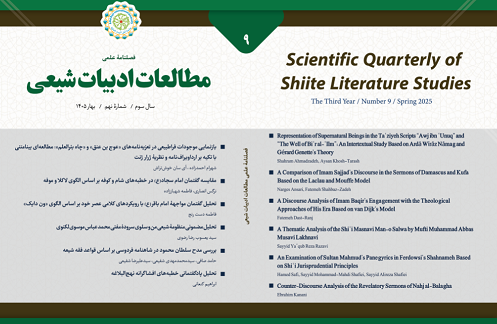
مطالعات ادبیات شیعی

مطالعات ادبیات شیعی

تحلیل گفتمان مواجهه امام باقر(ع)با رویکردهای کلامی عصر خود بر اساس الگوی «ون دایک»

نوع مقاله : مقاله پژوهشی

نویسنده
دانشیار گروه علوم قرآن و حدیث دانشگاه اراک
10.22034/ssl.2026.2093595.1088
چکیده
گسترش قلمرو حاکمیت اسلامی و نفوذ اندیشه‌های فلسفی بیگانه، زمینه‌ساز ظهور جریان‌های فکری و کلامی متنوع در جامعه اسلامی شد. دوران امام باقر7 ، به دلیل بافتار سیاسی-اجتماعی خاص، یکی از ادوار پرمناقشه در تکوین گفتمان‌های متعارض به‌شمار می‌رود. بررسی گفتمان‌های موجود و تحلیل نوع مواجه امام باقر7 با گفتمان‌های رقیب می‌تواند دلایل شکل‌گیری کنش‌های گفتاری قابل ردیابی در متون روایی و تفسیری ایشان را روشن‌تر نماید. از این رو در نوشتار حاضر بر اساس الگوی تحلیل گفتمان انتقادی ون دایک، از طریق تشکیل مربع ایدئولوژیک، به این مسئله پرداخته شد و این نتیجه حاصل آمد که در سایه دو قطبی کلان مکتب اهل بیت و مکتب خلفا، تقابل‌های گفتمانی دیگری نیز وجود دارند که در آن خوارج، غلات، مرجئه، قدریه، جبریه، اهل رأی و غیره از کنشگران فعال اجتماعی هستند. هدف امام باقر7 احیا و بقای تبیین نبوی از قرآن، حفظ سیره نبوی و قطب بندی اصیل بر مبنای حق و باطل است. جهت نیل به این هدف در تقابل با جریان‌های متعارض از طریق مناظرات و احتجاجات عقلی و کلامی، تأکید بر جریان اصیل تفسیری و تأکید بر مرجعیت حقیقی علمی سعی بر به حاشیه راندن گفتمان رقیب داشته و با تشکیل شبکه‌ شاگردان، برپایی حلقه‌های درسی، صدور و تدوین احادیث و کاربست عقل و اجتهاد در تفسیر به برجسته‌سازی گفتمان خودی اهتمام نموده است. این امور از طریق اتخاذ راهبردهایی چون اصلاح دیدگاه، ردّ و تکذیب، ترمیم و تبیین، رفع ابهام، مقوله‌بندی، توصیف کنشگران، گواه نمایی، تعمیم و بازنمایی مثبت صورت گرفته است.
کلیدواژه‌ها
موضوعات

عنوان مقاله English

Discourse Analysis of Imam Baqir’s Confrontation with the Theological Approaches of His Era Based on van Dijk’s Model

نویسنده English

Fatemeh Dastranj
Associate Professor, Department of Quran and Hadith Sciences, University of Arak
چکیده English

Abstract

The expansion of Islamic governance and the influx of foreign philosophical ideas facilitated the emergence of diverse intellectual and theological currents within Islamic society. Due to its unique socio-political context, the era of Imam Baqir (as) represents one of the most contentious periods in the formation of conflicting discourses. Analyzing existing discourses and Imam Baqir’s confrontation with rival discourses elucidates the underlying reasons for the discursive actions traceable in his narrated and exegetical texts. Accordingly, this study employs Van Dijk’s Critical Discourse Analysis (CDA) framework, specifically utilizing the “Ideological Square,” to investigate this phenomenon. The findings reveal that beneath the macro-polarization between the School of Ahl al-Bayt and the School of the Caliphs, other discursive confrontations existed involving active social actors such as the Khawarij, Ghulat, Murji’ah, Qadariyyah, Jabriyyah, and Ahl al-Ra’y. Imam Baqir’s objective was to revive and preserve the Prophetic interpretation of the Quran, uphold the Prophetic tradition, and maintain the authentic dichotomy of Truth and Falsehood. To achieve this and marginalize the “Other” discourse, he engaged in debates and rational-theological arguments, emphasized authentic exegetical traditions, and asserted genuine scientific authority. By establishing student networks, organizing study circles, codifying Hadith, and applying reason (Aql) and ijtihad in exegesis, he sought to foreground the “Self” discourse. These actions were implemented through strategies such as viewpoint correction, rejection and denial, repair and explanation, disambiguation, categorization, actor description, evidentiation, generalization, and positive representation.

کلیدواژه‌ها English

Imam Baqir (as)
Discourse Analysis
Theological Approaches
Van Dijk
Ideological Square