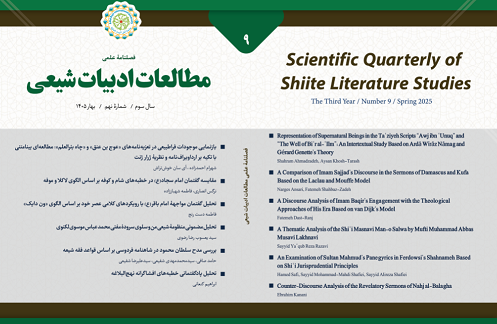
مطالعات ادبیات شیعی

مطالعات ادبیات شیعی

بازنمایی موجودات فراطبیعی در تعزیه‌نامه‌های عوج بن عناق و چاه بئرالعلم: مطالعه‌ای بینامتنی با تکیه بر ارداویرافنامه و نظریه ژرار ژنت

نوع مقاله : مقاله پژوهشی

نویسندگان
دانشکده هنر و معماری دانشگاه آزاد اسلامی واحد تهران مرکز
10.22034/ssl.2026.2091264.1085
چکیده
تعزیه به‌عنوان یکی از مهم‌ترین گونه‌های نمایش آیینی ایران، بستری برای بازنمایی مفاهیم قدسی، اسطوره‌ای و فراانسانی فراهم می‌کند. در بسیاری از تعزیه‌نامه‌ها، موجودات فراطبیعی (Supernatural) همچون ملائکه، اجنه، دیوان و نیروهای فرازمینی نقش مهمی در شکل‌دهی به کنش نمایشی، تقابل خیر و شر و تولید معناهای آیینی دارند. پژوهش حاضر با هدف بررسی شیوه‌های بازنمایی موجودات فراطبیعی در تعزیه‌نامه‌های «عوج بن عناق» و «چاه بئرالعلم» و تحلیل روابط بینامتنی(Intertextuality) آن‌ها با ارداویرافنامه انجام شده است. مسئله اصلی پژوهش این است که این موجودات چگونه در متون یادشده بازنمایی می‌شوند و چه الگوهای بینامتنی میان آن‌ها و ارداویرافنامه قابل شناسایی است. روش پژوهش توصیفی ـ تحلیلی و مبتنی بر مطالعات کتابخانه‌ای است و چارچوب نظری آن بر نظریه بینامتنیت ژرار ژنت(Gérard Genette) استوار شده است. یافته‌ها نشان می‌دهد که تعزیه‌نامه‌های مورد بررسی، با وجود تفاوت‌های زمینه‌ای، در بازنمایی عناصر فراطبیعی از الگوهایی مشترک با ساختار روایی ارداویرافنامه بهره می‌برند. در هر دو متن، موجودات فراطبیعی به‌عنوان واسطه میان جهان انسانی و امر قدسی عمل کرده و مفاهیمی چون پاداش، عذاب، هدایت و تقابل خیر و شر را آشکار می‌سازند. با این حال، کارکرد این موجودات در تعزیه ماهیتی دراماتیک و آیینی یافته و به تجربه جمعی مخاطب پیوند می‌خورد، در حالی‌که در ارداویرافنامه بیشتر بر کارکرد تعلیمی و اخلاقی تأکید می‌شود. در نهایت، نتایج نشان می‌دهد تعزیه نه صرفاً بازتاب متون کهن، بلکه بازآفرینی خلاقانه عناصر فراطبیعی در بستر نمایشی است.
کلیدواژه‌ها
موضوعات

عنوان مقاله English

Representation of Supernatural Beings in the Ta'ziyeh Scripts of 'Uj ibn 'Anāq and the Well of Bi'r al-'Ilm: An Intertextual Study Based on the Ardā Virāf Nāmeh and Gérard Genette's Theory

نویسندگان English

Shahram Ahmadzaadeh
Aysan Khoshtarash
Faculty of Art and Architecture, Islamic Azad University, Central Tehran Branch
چکیده English

Ta'ziyeh, as one of the most significant forms of ritualistic drama in Iran, provides a medium for representing sacred, mythical, and transcendental concepts. In many Ta'ziyeh scripts, supernatural beings such as angels, jinn, demons, and extraterrestrial forces play an important role in shaping dramatic action, the conflict between good and evil, and the production of ritual meanings. The present study aims to investigate the modes of representing supernatural beings in the Ta'ziyeh scripts of 'Uj ibn 'Anāq and The Well of Bi'r al-'Ilm, and to analyze their intertextual relationships with the Ardā Virāf Nāmeh. The main research question is how these beings are represented in the aforementioned texts, and what intertextual patterns can be identified between them and the Ardā Virāf Nāmeh. The research method is descriptive-analytical and based on library studies, and its theoretical framework is grounded in Gérard Genette's theory of intertextuality. The findings indicate that despite contextual differences, the Ta'ziyeh scripts under examination employ patterns in representing supernatural elements that are shared with the narrative structure of the Ardā Virāf Nāmeh. In both texts, supernatural beings act as intermediaries between the human world and the sacred, revealing concepts such as reward, punishment, guidance, and the conflict between good and evil. However, the function of these beings in Ta'ziyeh has taken on a dramatic and ritualistic nature, becoming linked to the collective experience of the audience, whereas in the Ardā Virāf Nāmeh, the emphasis is more on didactic and moral functions. Ultimately, the results show that Ta'ziyeh is not merely a reflection of ancient texts, but a creative re-creation of supernatural elements within a dramatic context.

کلیدواژه‌ها English

Ta'ziyeh, supernatural beings, representation, intertextuality, Ardā Virāf Nāmeh, Gé
rard Genette